 AwareSTEM · Explore. Test. Understand.
AWARESCIENCE
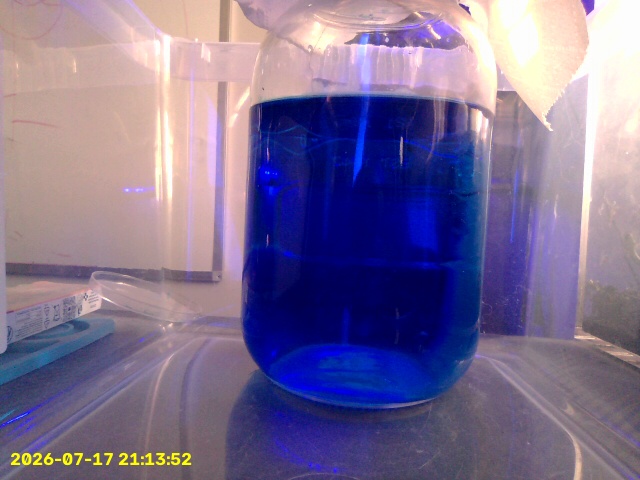
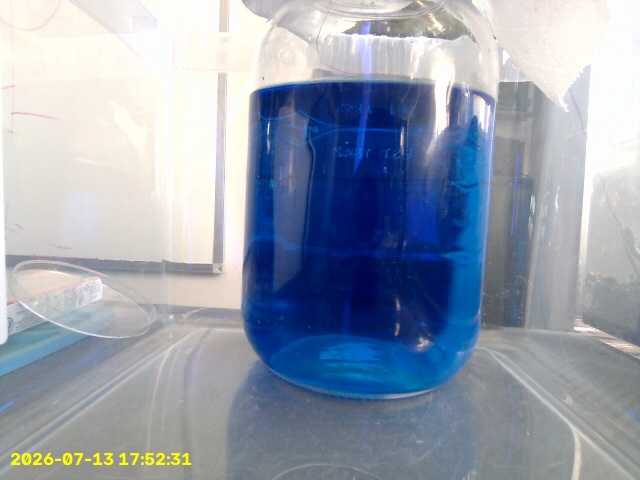
Real chemistry, real observation. A copper sulphate crystal is growing from a seed crystal suspended in saturated solution, with method notes, safety controls and hourly snapshots building toward a full time lapse.
CAM: STALE
EXPERIMENT: CRYSTAL GROWTH
AGE: Day 10
LOCATION: DONCASTER, UK
Live crystal cam
Started8 July 2026
StageMain crystal grow
ChemicalCopper sulphate pentahydrate
SolutionApprox 500ml total saturated solution
Experimental setup400ml water at 60°C, 130g copper sulphate, plus extra until saturated, then added to the original seed solution
SeedSingle seed crystal suspended on fishing line
Photo intervalEvery hour
Page refreshEvery 5 minutes
Last updated16 Jul 2026 19:50:59
Purpose: To observe how copper sulphate crystals grow from a seed crystal as water slowly evaporates from a saturated solution.
Method summary: Seed crystals were first grown in a petri dish, then the best clear crystal was moved into a larger saturated solution for slow growth.
Experiment record
What we are growing
Copper sulphate pentahydrate crystals. Hot water dissolves more copper sulphate than cooler water. As the solution cools and water slowly evaporates, the dissolved copper sulphate comes back out of solution and builds onto crystal faces.
Materials used
- Copper sulphate pentahydrate
- Water heated to about 60°C
- Glass beaker or heat safe lab jar
- Digital scales
- Measuring jug or measuring cylinder
- Filter paper
- Petri dishes for seed crystals
- Kilner jar or tall glass jar for the main crystal
- Fishing line
- Wooden skewer
- Tray for spill control
- Labels and pen
- Webcam for hourly snapshots
Method used
- A small saturated copper sulphate solution was made using warm water.
- Copper sulphate was added slowly until a small amount would no longer dissolve.
- The solution was left to settle, then filtered to remove undissolved powder and grit.
- A shallow layer of filtered solution was placed into petri dishes to grow seed crystals.
- Clear seed crystals were left to grow until they were large enough to move safely.
- The best seed crystal was selected and suspended on fishing line from a wooden skewer.
- A larger saturated solution was prepared for the main growth jar.
- The seed crystal was hung in the centre of the jar, not touching the bottom or sides.
- The jar was covered with paper, labelled, placed in a tray and left undisturbed.
- A webcam records regular snapshots so the growth can be turned into a time lapse.
Safety controls
- Gloves and safety glasses were worn during mixing and handling.
- The experiment was carried out inside a tray to contain spills.
- All containers and tools used with copper sulphate are now lab only.
- No food or drink is kept near the experiment.
- The crystal jar and stored solution are clearly labelled.
- The solution is not poured down the sink.
- Children are supervised and do not handle the chemical or crystals directly.
- Crystals are not touched with bare hands.
- The jar is kept away from pets, food areas, direct sunlight and places where it could be knocked.
What we are observing
- Crystal size and shape
- Colour and clarity
- Whether the main crystal grows evenly
- Whether extra crystals form on the bottom or sides
- How much liquid evaporates over time
- How the crystal changes in the hourly image sequence
- Whether the fishing line grows unwanted side crystals
Handling and preservation notes
- Do not rinse the crystal with water because it can dissolve or round off the edges.
- Do not seal the growth jar airtight while the crystal is still growing.
- Do not coat the main crystal with clear lacquer until it is finished growing.
- When finished, the display crystal can be dried on filter paper and sealed with clear gloss acrylic lacquer.
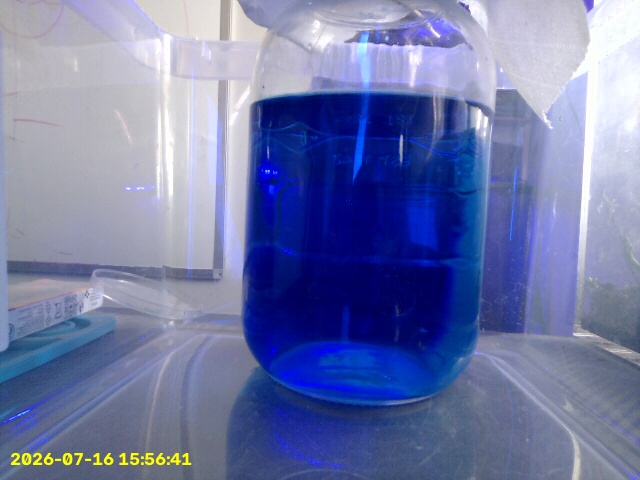
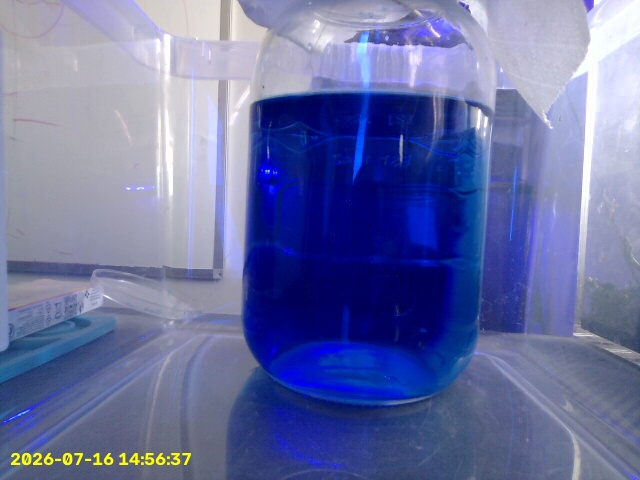
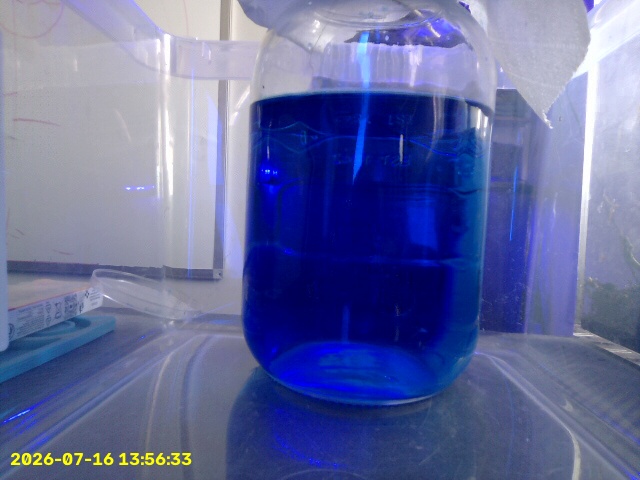
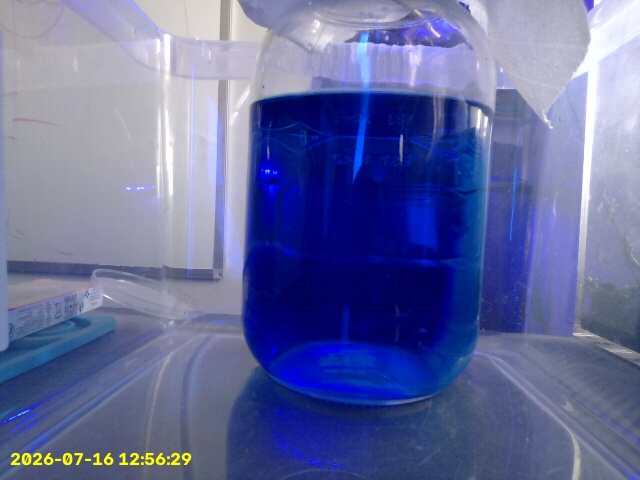
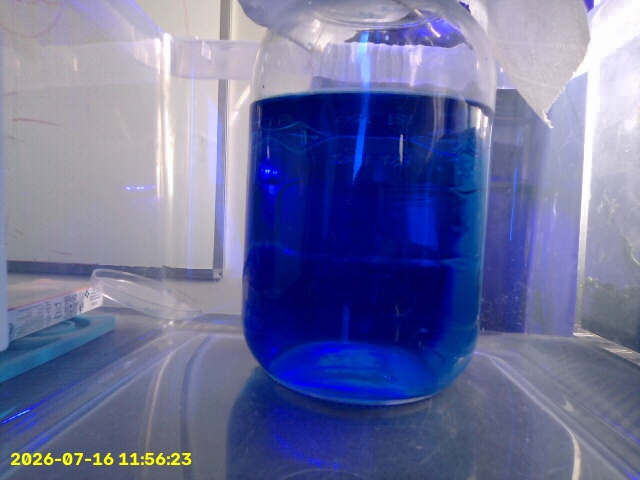
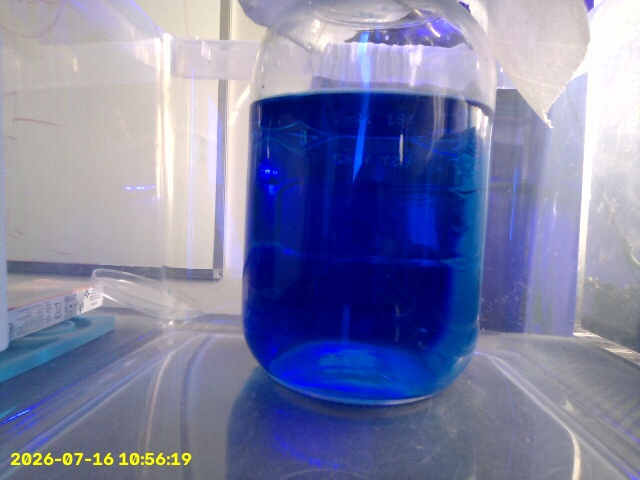
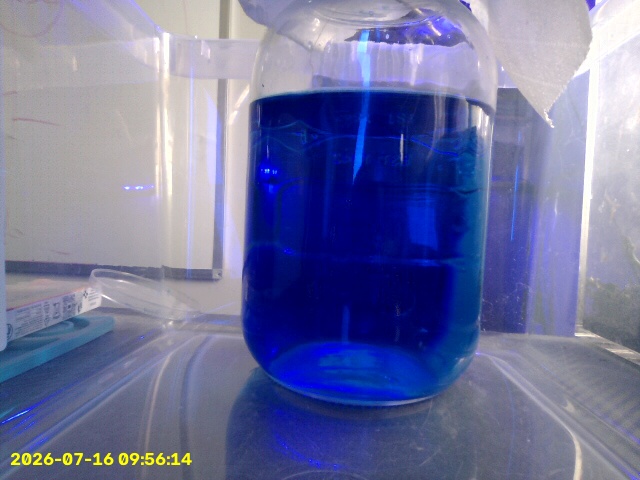
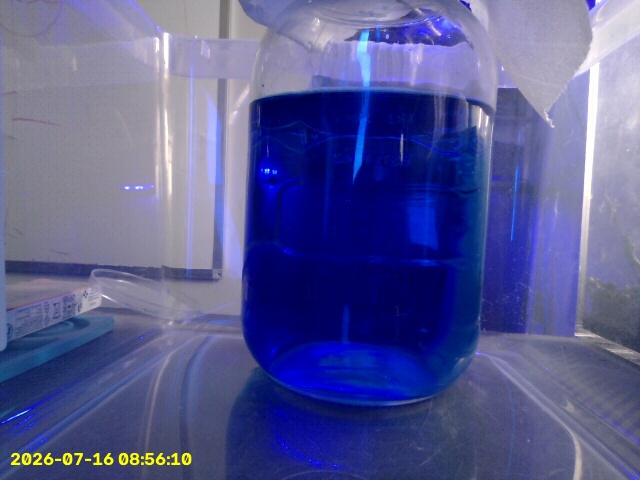
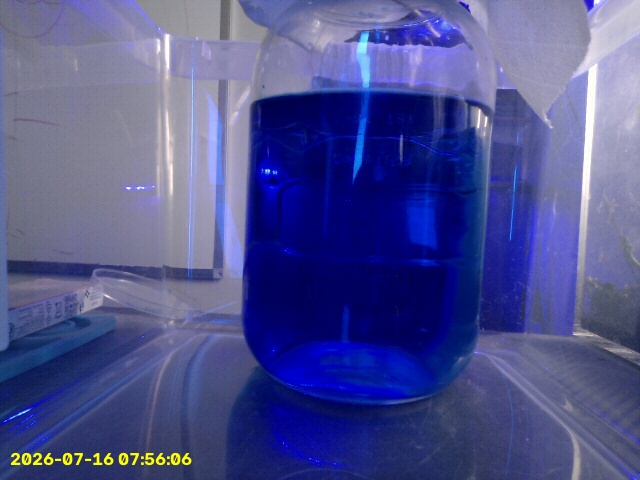
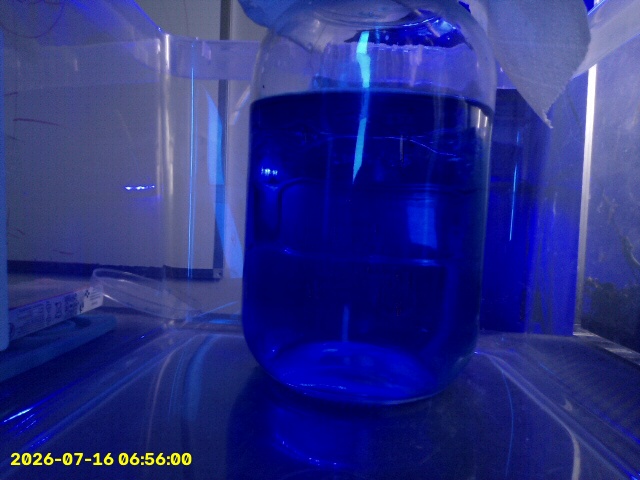
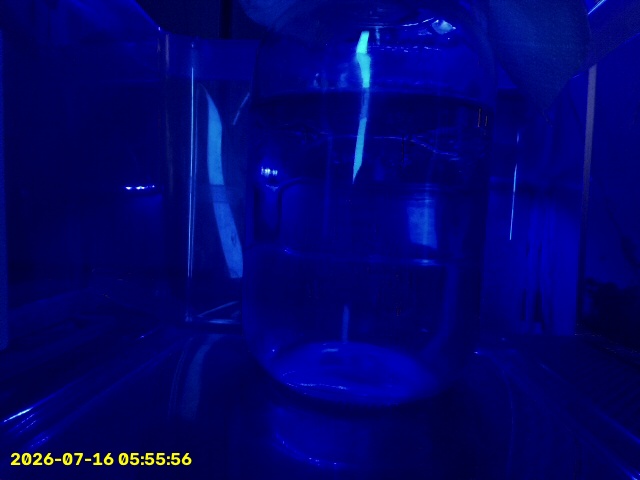
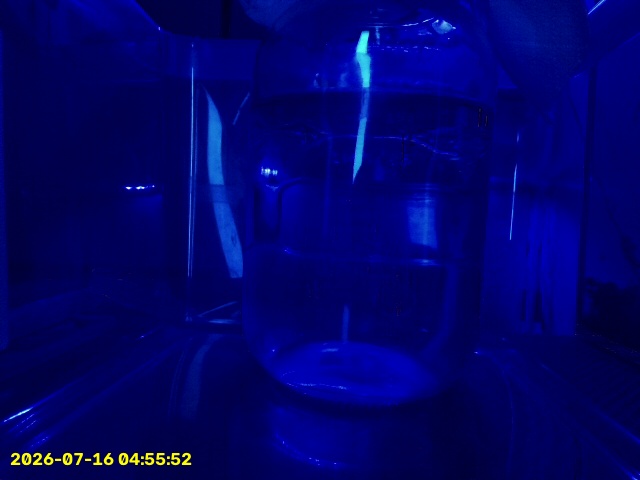
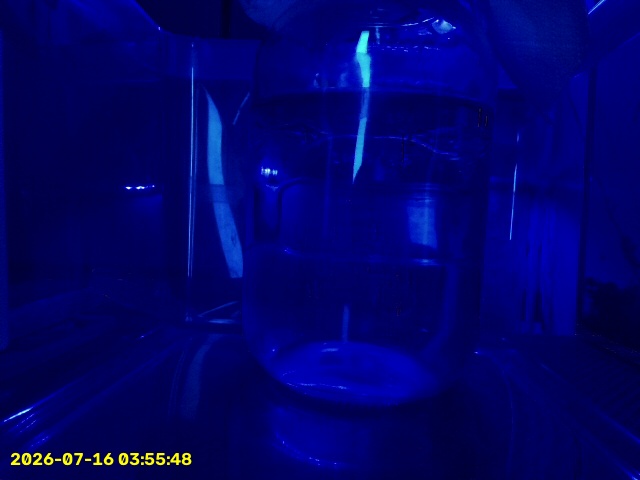
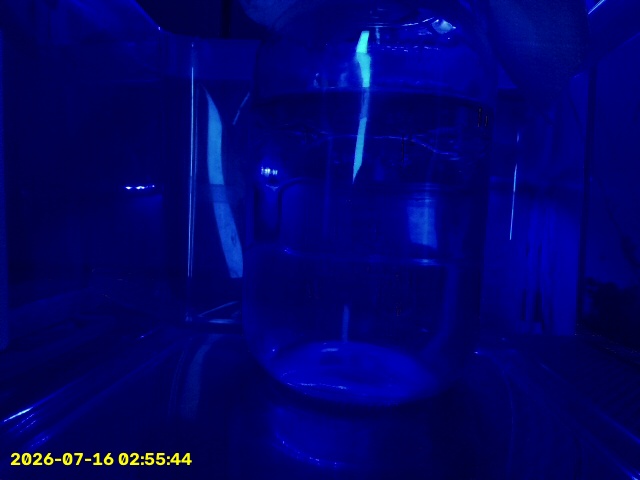
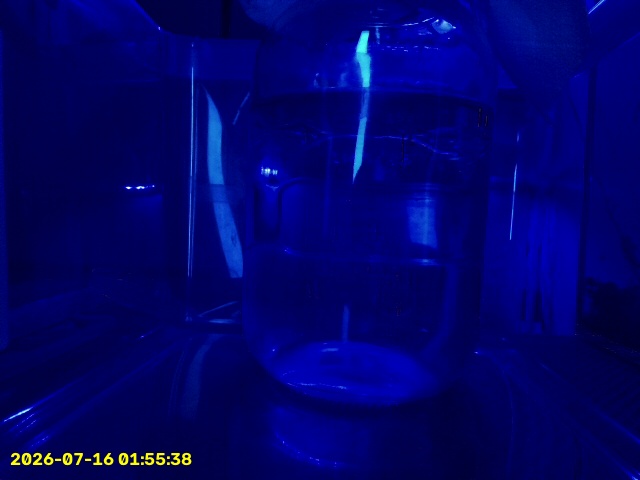
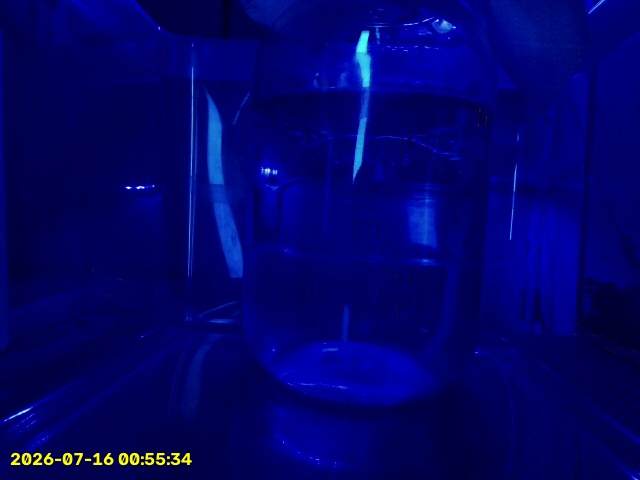
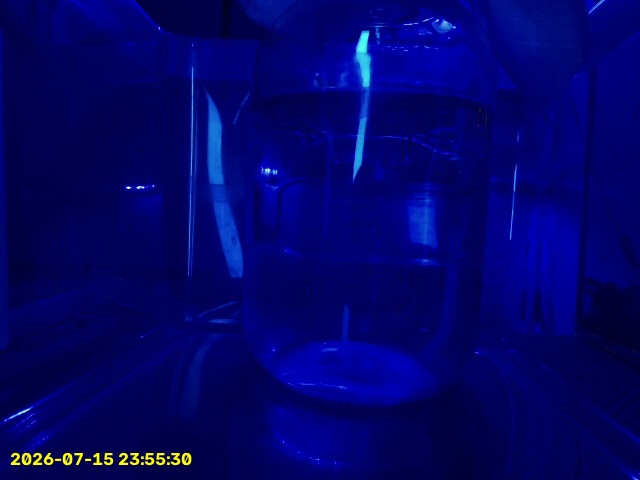
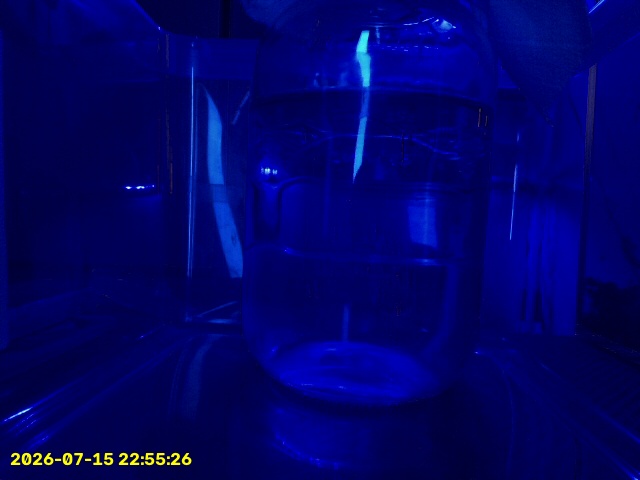
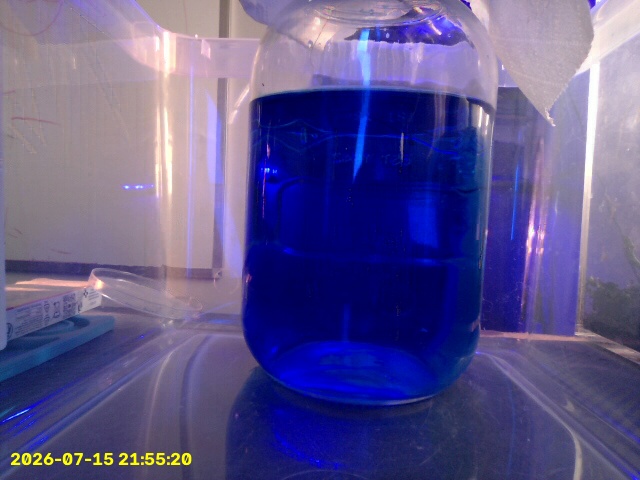
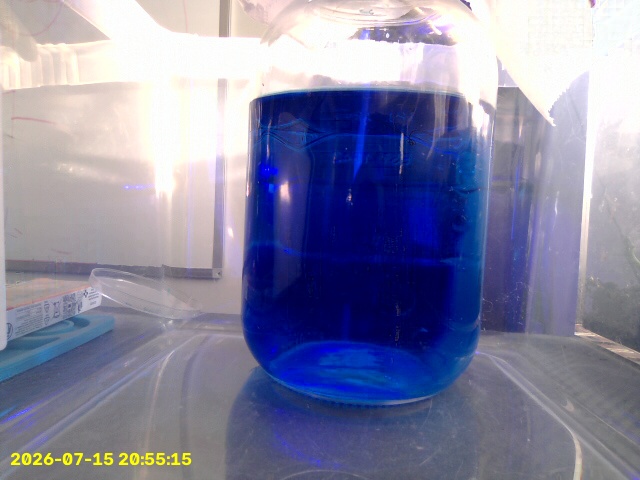
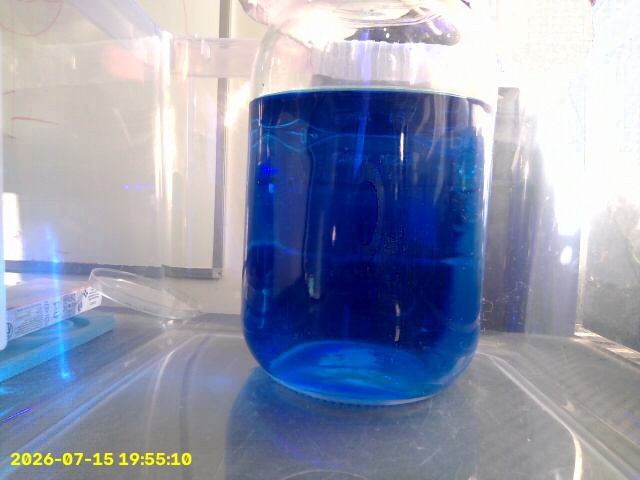
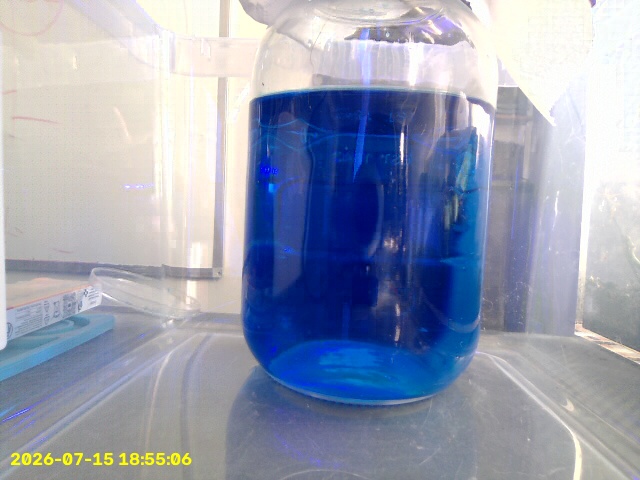
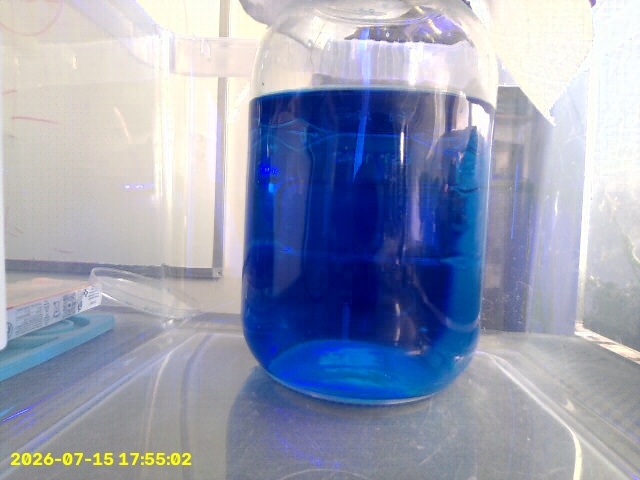
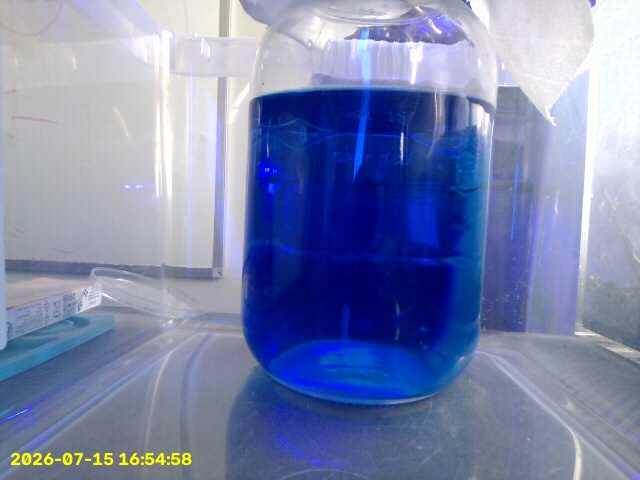
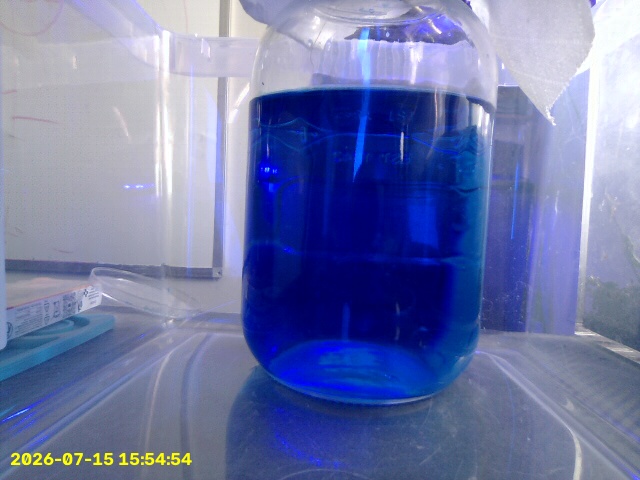
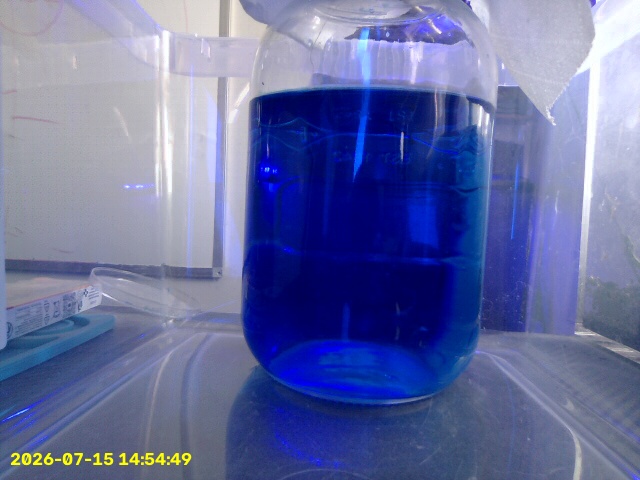
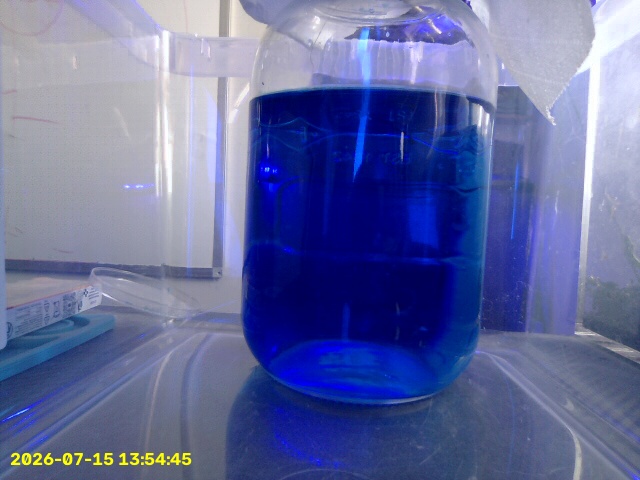
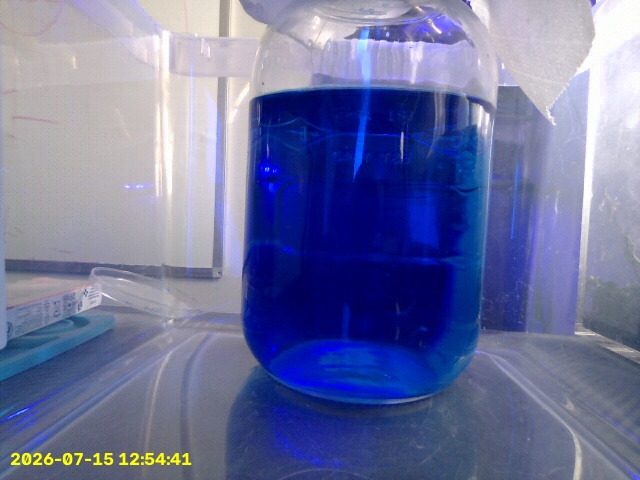
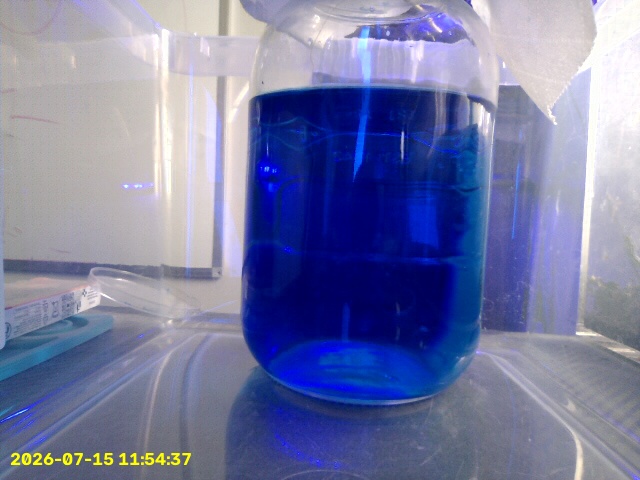
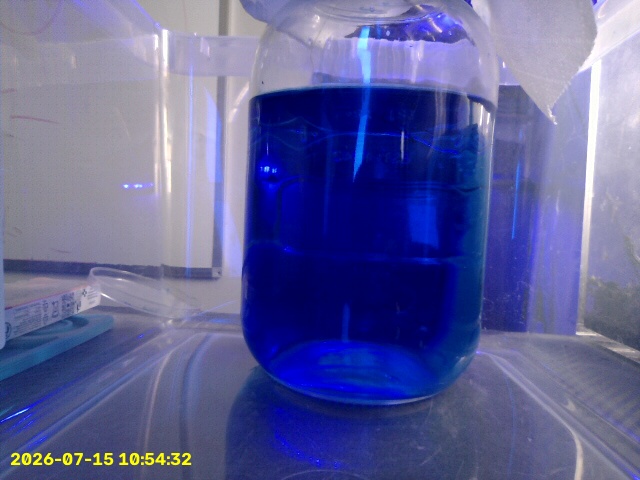
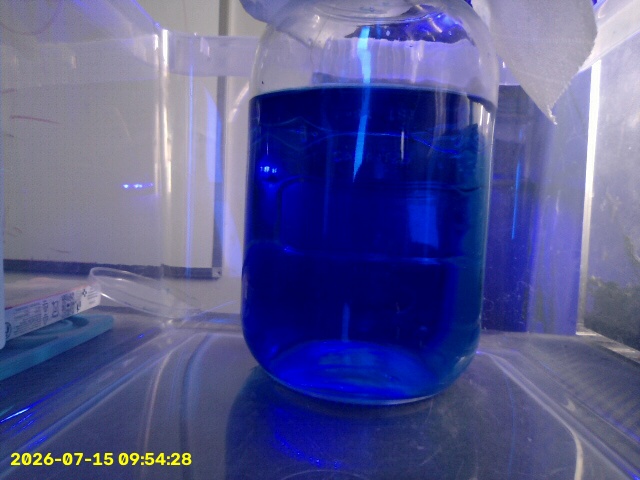
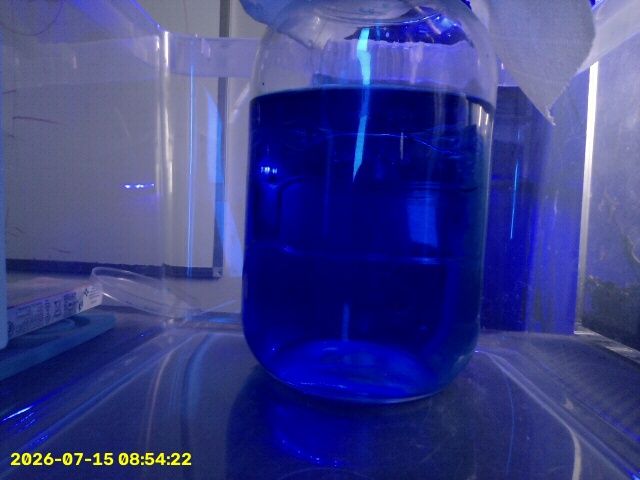
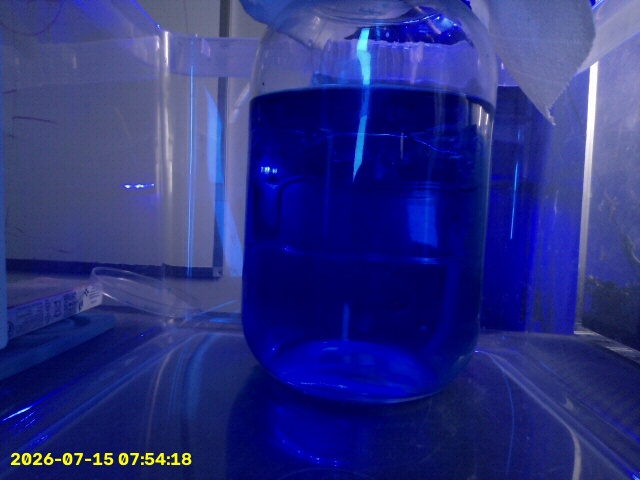
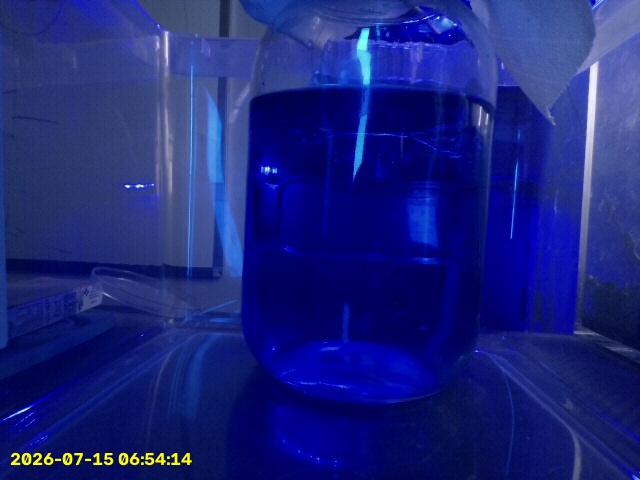
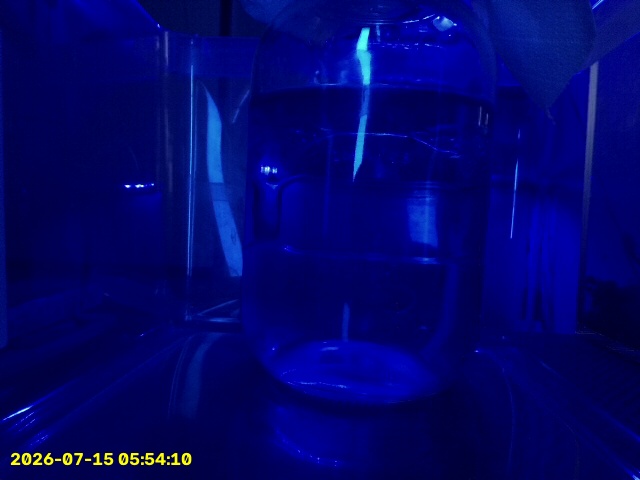
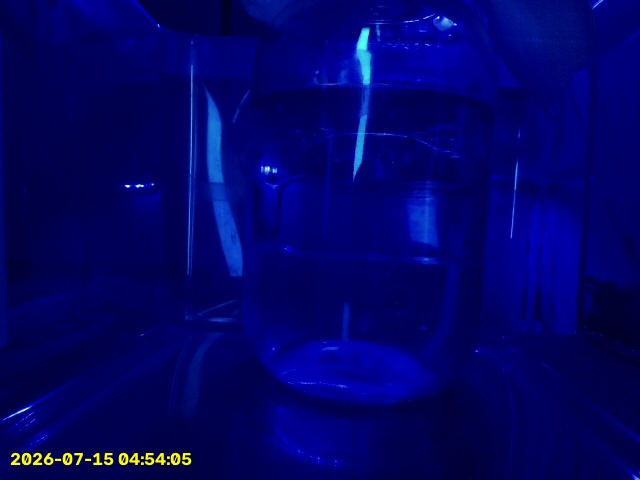
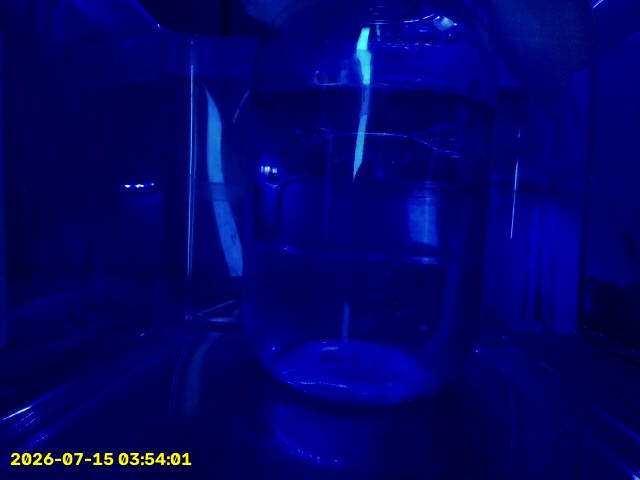
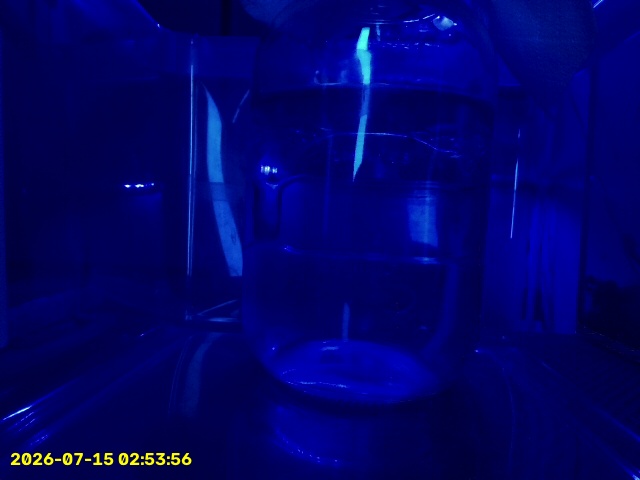
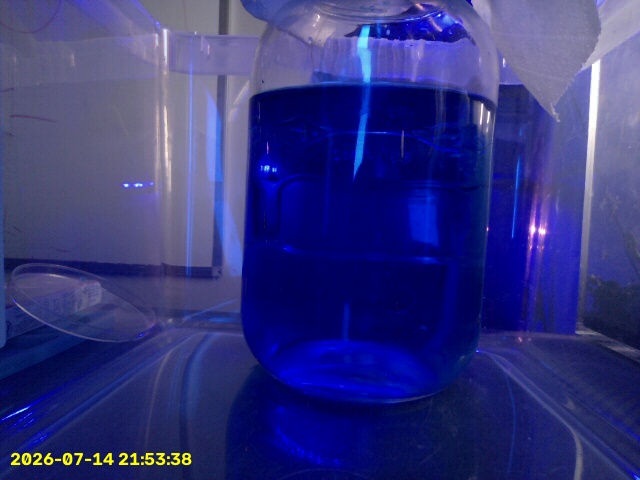
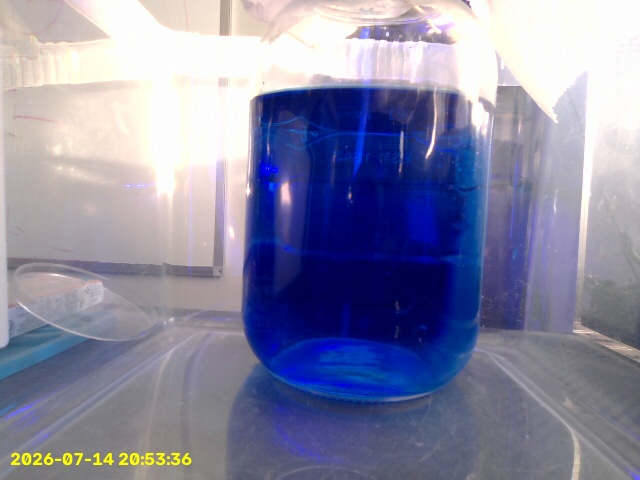
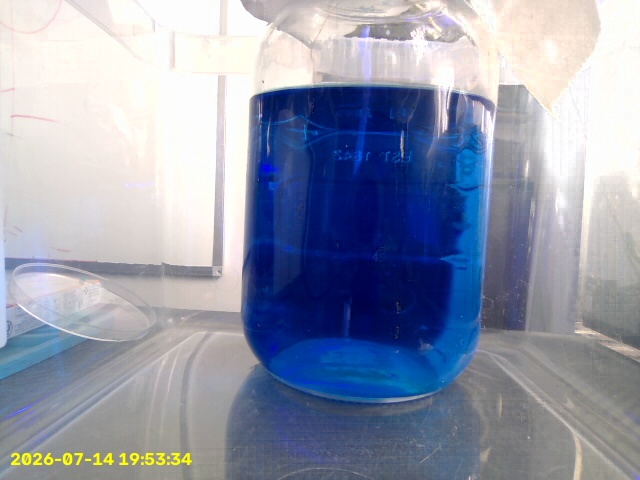
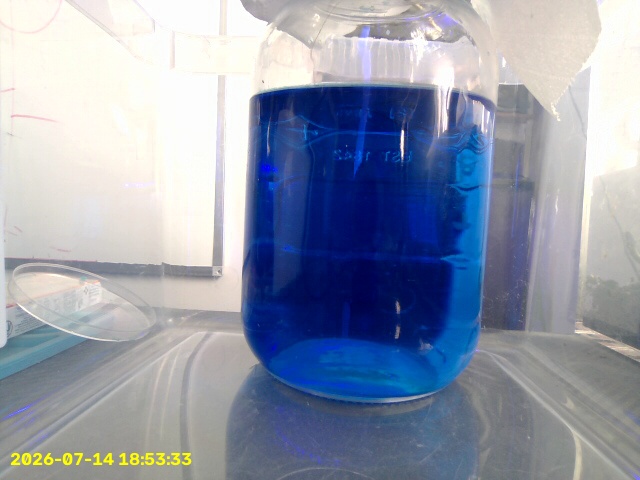
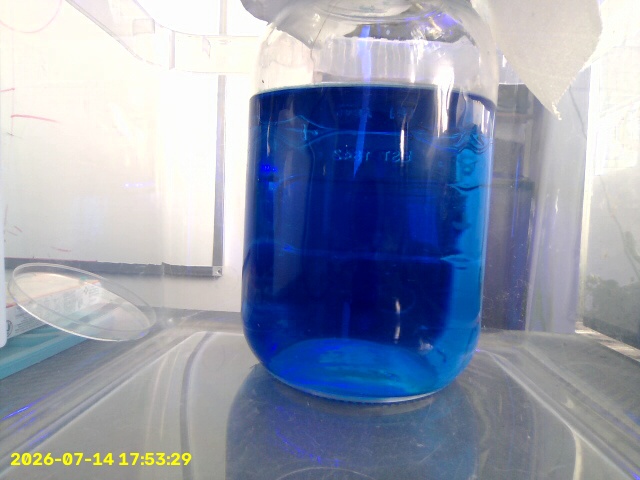
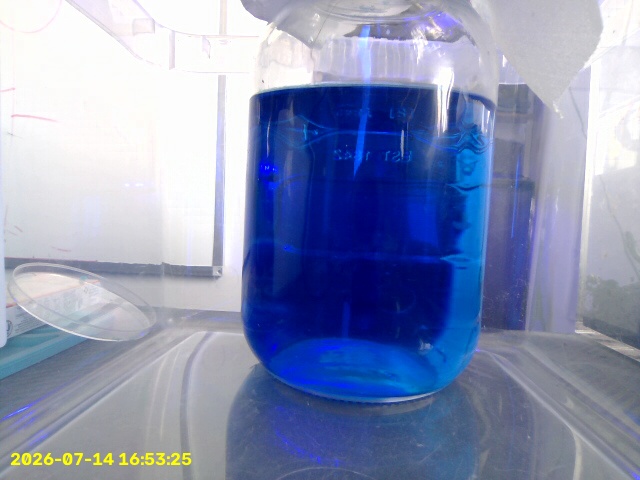
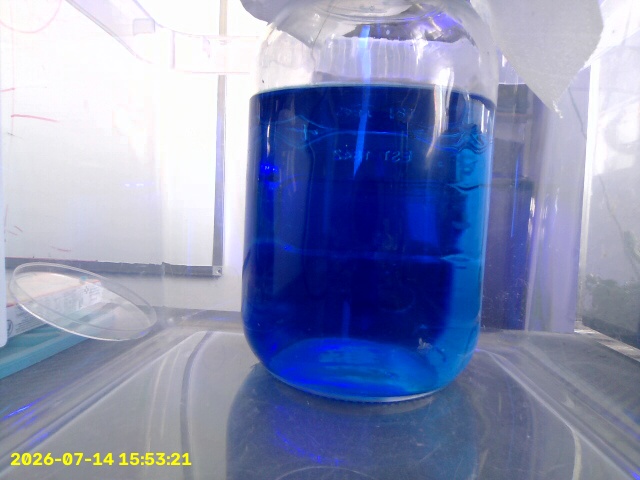
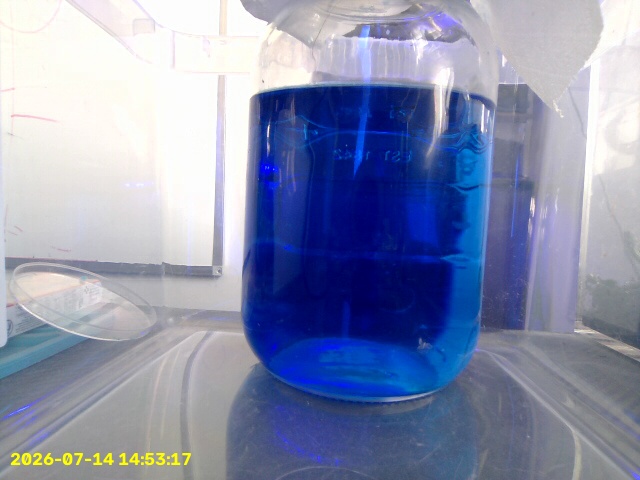
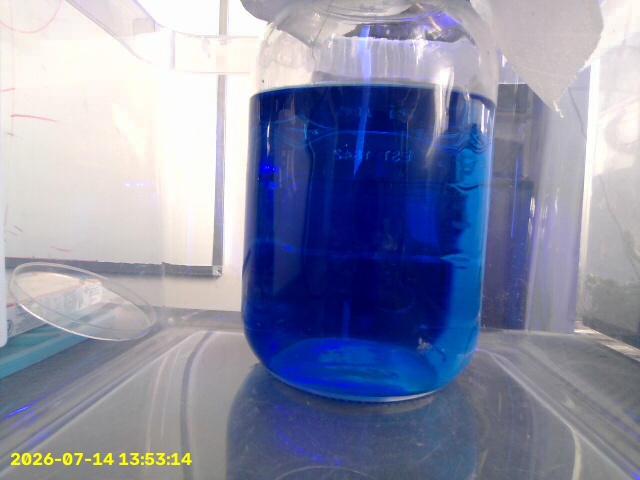
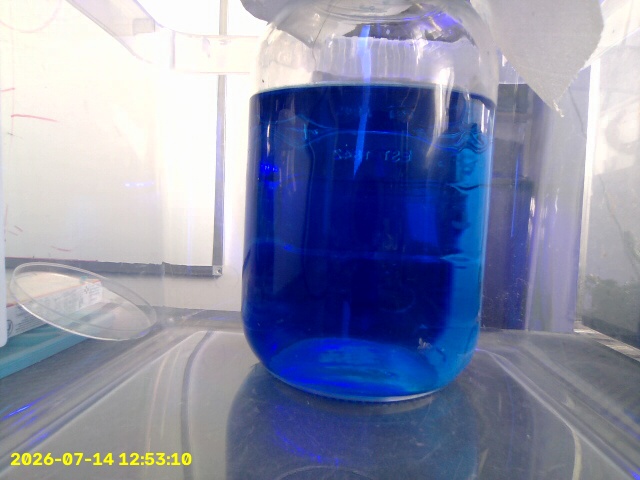
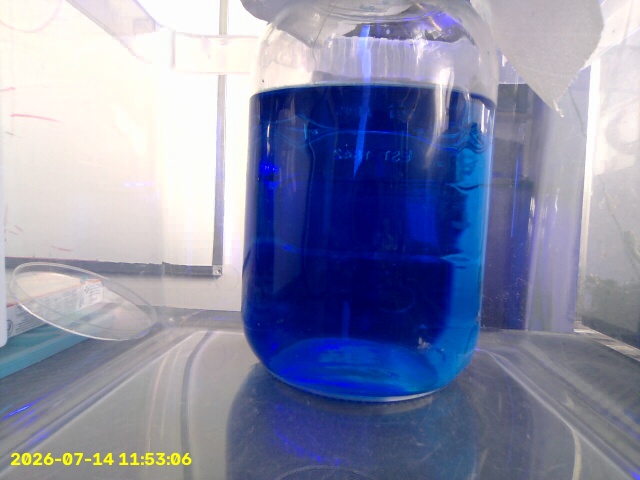
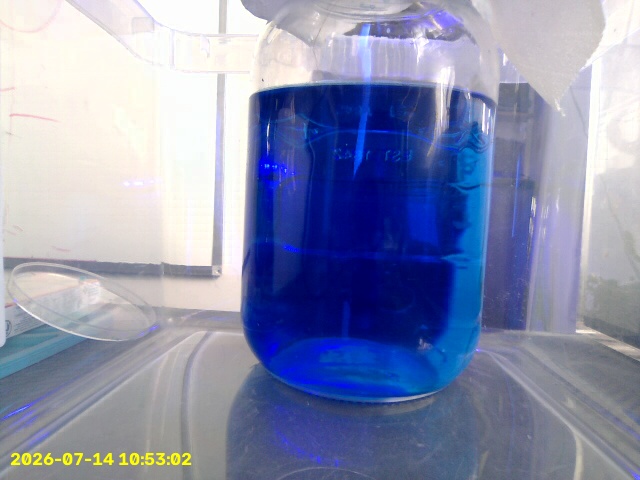
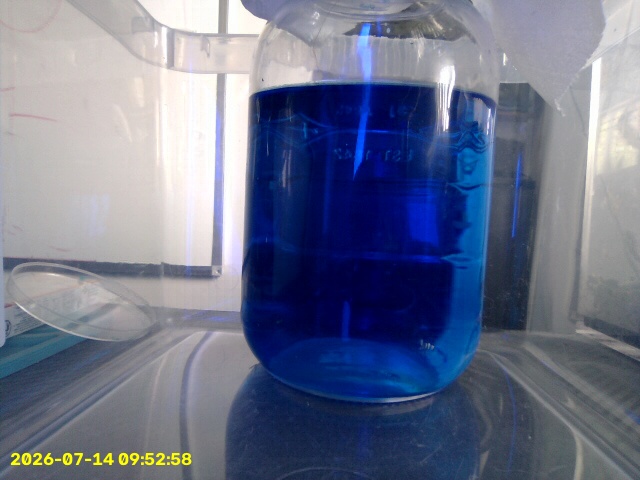
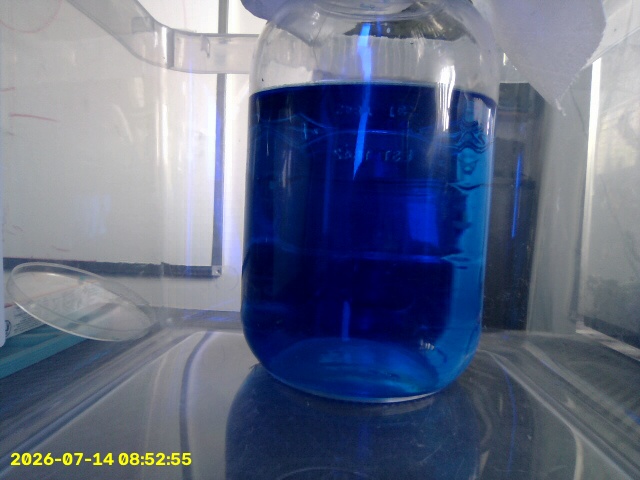
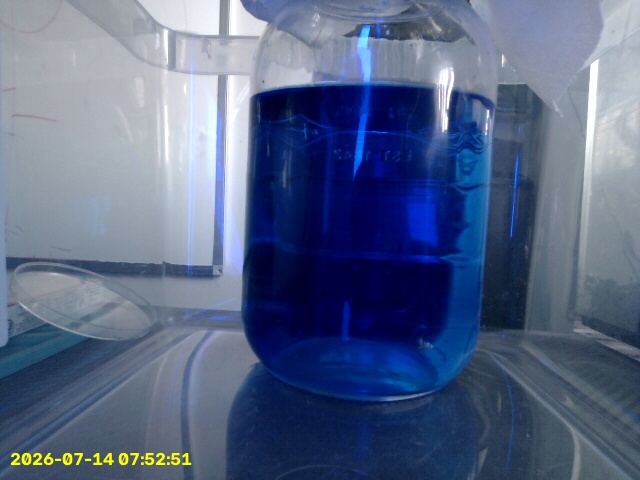
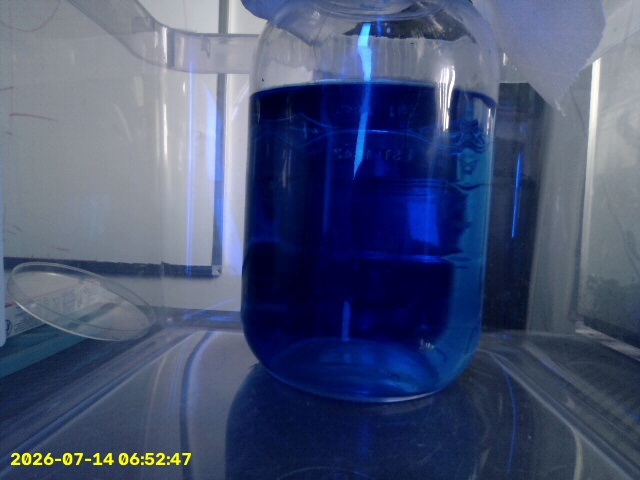
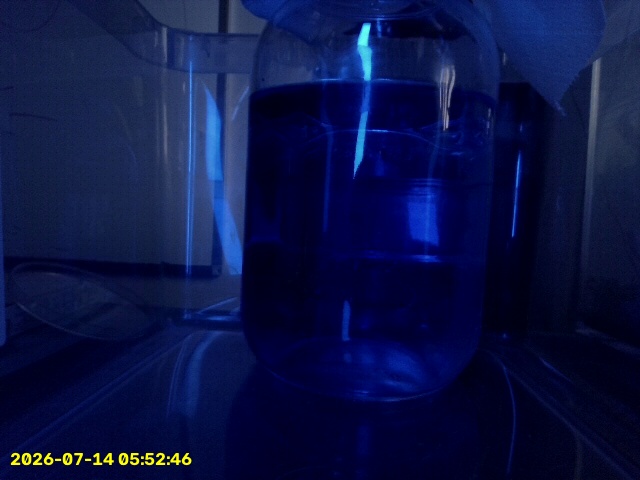
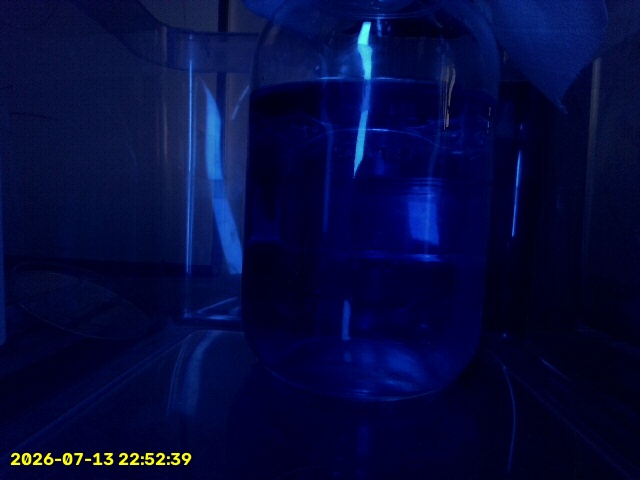
Hourly snapshot gallery (72 shown of 134)
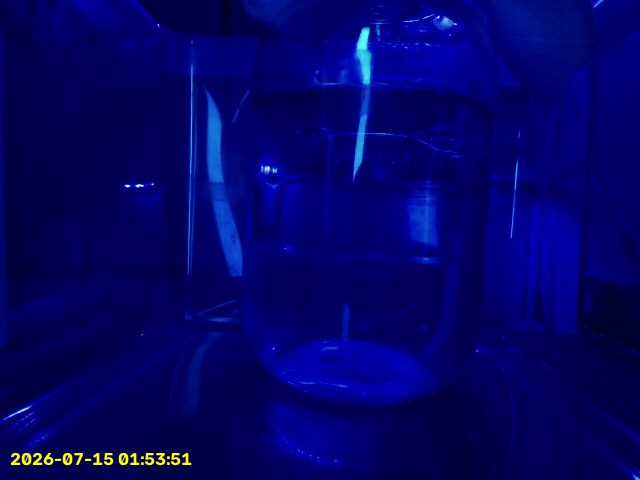
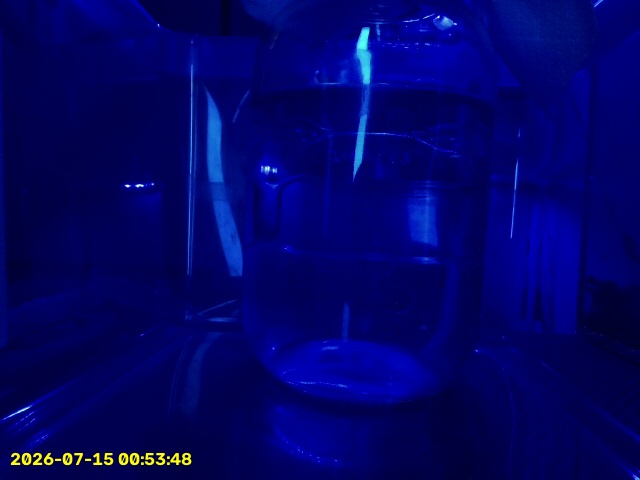
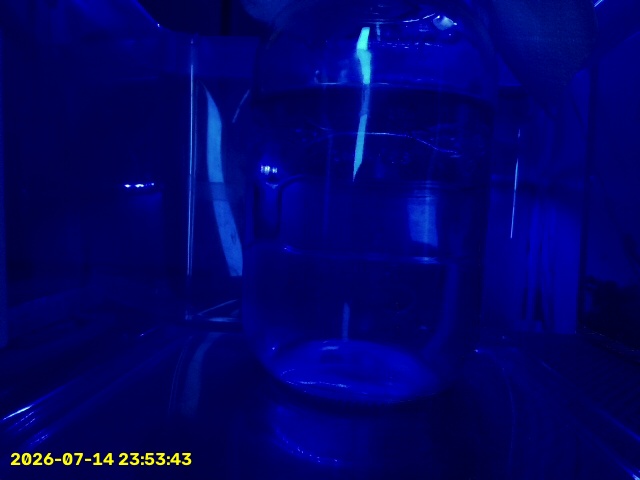
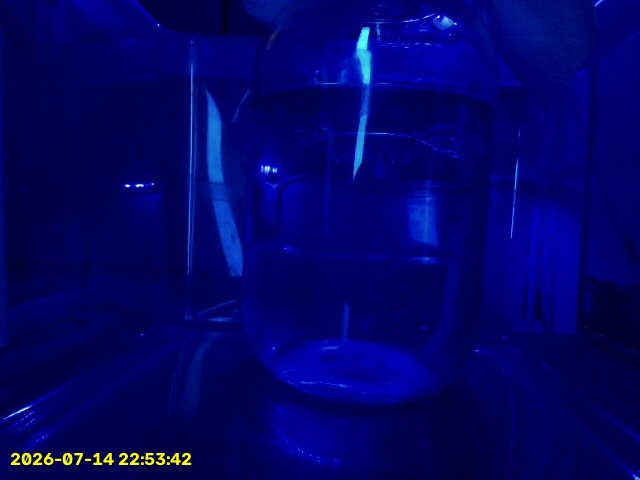
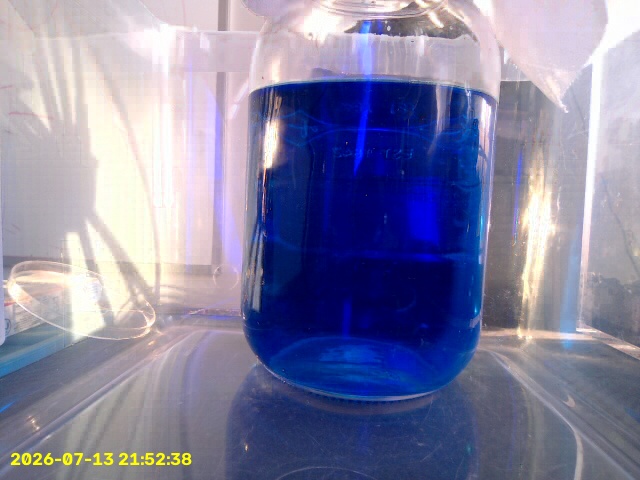
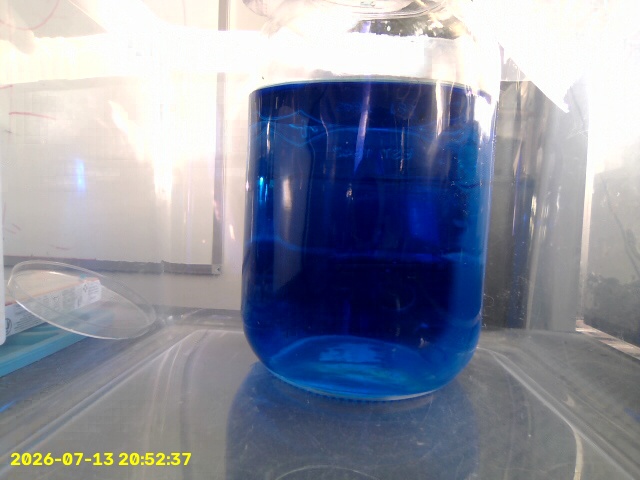
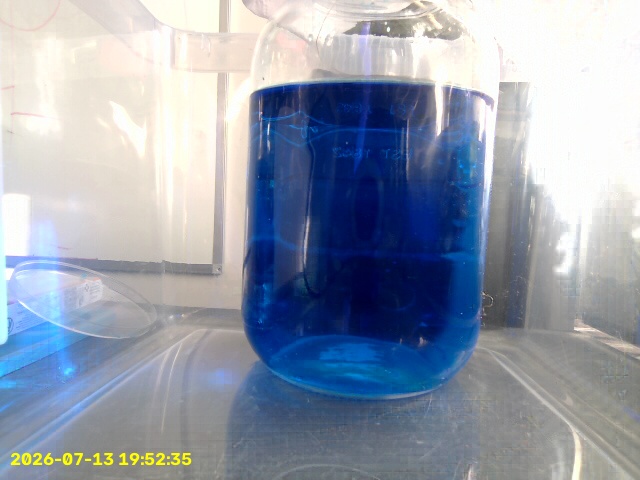
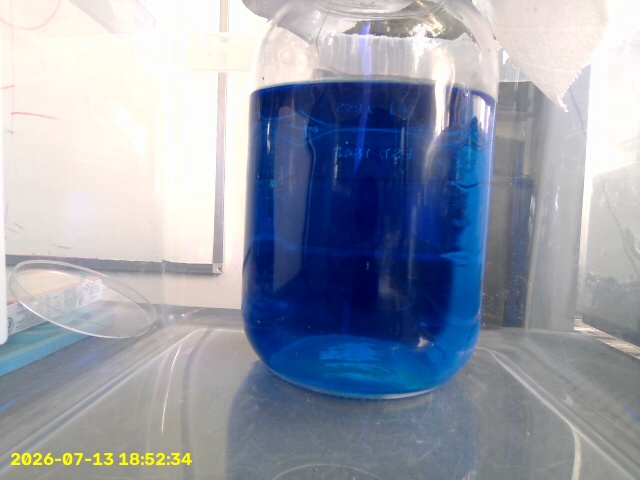
Lab safety note: copper sulphate pentahydrate is irritating to skin and eyes and harmful if swallowed. Gloves and safety goggles were worn throughout mixing and handling. The crystal jar is kept labelled, covered, and inside a tray. All glassware, jugs, jars and tools used with it are lab-only from here on and must never be returned to food or drink use.